

Personal Finance Club Calculator: A Smart Tool to Take Control of Your Money
A personal finance club calculator helps individuals and groups track income, expenses, savings, and shared financial goals in one clear system. Whether you are part of a student finance club, a workplace savings group, or a community-based personal finance club in the USA, this calculator simplifies budgeting, forecasting, and decision-making. In short, it turns financial discussions into clear numbers you can trust.
This guide explains what a personal finance club calculator is, how it works, why it matters, and how you can use it effectively to build better money habits—individually and as a group.
What Is a Personal Finance Club Calculator?

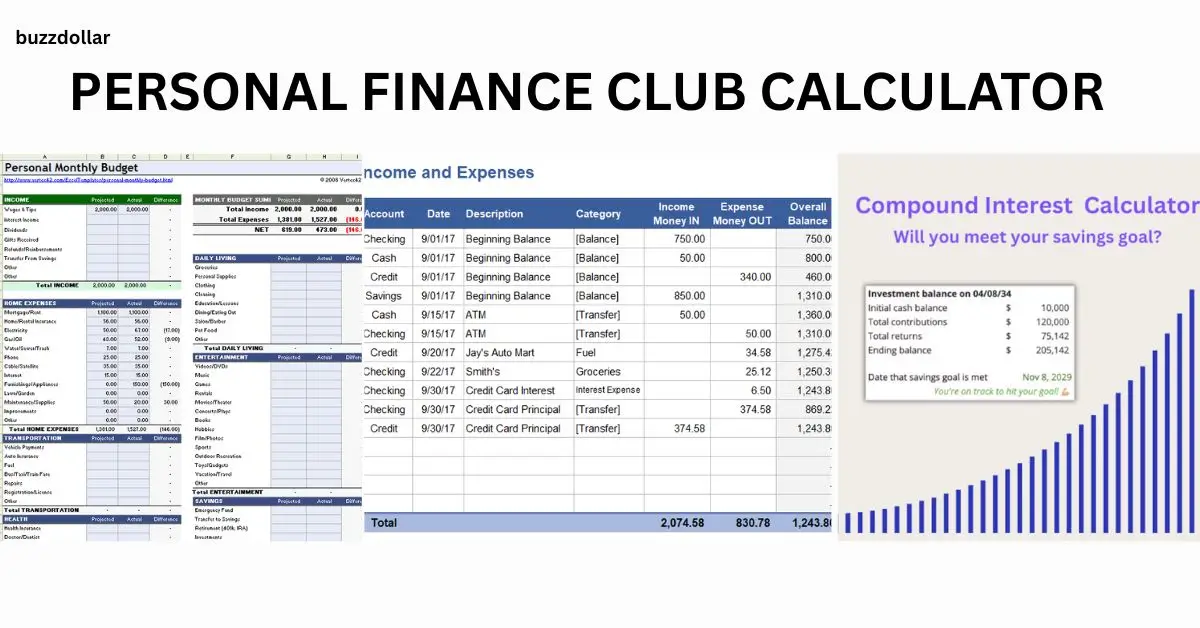
personal finance club calculator is a budgeting and planning tool designed for groups that learn, save, or invest together. Unlike a basic personal budget calculator, it focuses on shared goals, contributions, and progress tracking.
It can be as simple as a spreadsheet or as advanced as an online financial planning tool. The core purpose stays the same:
to help members understand their finances and make informed decisions together.
Who typically uses it?
- Student finance clubs
- Community savings groups
- Workplace financial wellness clubs
- Family or friends running a joint savings plan
How Does a Personal Finance Club Calculator Work?
At its core, the calculator organizes financial data into clear categories and formulas.
Common inputs include:
- Monthly income (individual or group)
- Fixed expenses (rents, utilities, subscriptions)
- Variable expenses (food, transport, entertainment)
- Savings contributions
- Debt payments
- Shared financial goals
What the calculator produces:
- Monthly and annual budget summaries
- Savings growth projections
- Contribution breakdowns per member
- Visual progress toward goals
This structure helps members see where money goes and where adjustments are needed.
Why Is a Personal Finance Club Calculator Important?
Money discussions often feel confusing or emotional. A calculator adds clarity and fairness.
Key benefits:
- Promotes transparency among members
- Encourages accountability
- Reduces misunderstandings about money
- Supports data-driven decisions
According to the Consumer Financial Protection Bureau (CFPB), people who actively track their finances are more likely to meet savings goals and reduce debt. Tools like calculators make that tracking easier and more consistent.
What Problems Does a Personal Finance Club Calculator Solve?
1. Lack of financial clarity
Members often guess instead of knowing. The calculator replaces assumptions with facts.
2. Unequal contributions
It shows who contributed what and when, which builds trust.
3. Poor goal tracking
Savings goals feel abstract without numbers. The calculator makes progress visible.
4. Inconsistent budgeting
A shared structure keeps everyone aligned month after month.
What Features Should a Good Personal Finance Club Calculator Have?
Not all calculators are equal. A high-quality one includes these essentials:
Core features to look for:
- Income and expense tracking
- Automatic totals and percentages
- Savings goal projections
- Member contribution tracking
- Adjustable categories
- Monthly and yearly views
Helpful advanced features:
- Charts and graphs
- Inflation estimates
- Emergency fund calculator
- Debt payoff calculator
- Export or sharing options
Is a Spreadsheet or Online Tool Better?
Both options work. The right choice depends on your club’s size and comfort level.
Spreadsheet-based calculator
Pros:
- Free or low-cost
- Fully customizable
- Works offline
Cons:
- Manual updates
- Requires basic spreadsheet skills
Online personal finance calculator
Pros:
- Automated calculations
- User-friendly interfaces
- Visual dashboards
Cons:
- May require sign-up
- Some tools charge fees.
For beginners, spreadsheets work well. For growing clubs, online tools save time.
How Do You Set Up a Personal Finance Club Calculator Step by Step?
Step 1: Define your club’s financial goals.
Examples:
- Emergency fund of $5,000
- Group travel savings
- Debt reduction challenge
Step 2: List all income sources.
Include:
- Member contributions
- Fundraisers
- Side income
Step 3: Track expenses clearly.
Separate:
- Fixed expenses
- Variable expenses
Step 4: Assign contribution rules
Decide whether contributions are
- Equal
- Income-based
- Percentage-based
Step 5: Review monthly
Hold a short review meeting to adjust numbers and plans.
Example: A Simple Personal Finance Club Calculator in Action
Imagine a small student finance club with 5 members.
- Each member contributes $100/month.
- Total monthly savings: $500
- Annual savings goal: $6,000
The calculator shows:
- Monthly progress: 8.3% of annual goal
- Remaining amount: $5,500
- Estimated completion date
This clarity keeps members motivated and focused.
How Does a Personal Finance Club Calculator Improve Financial Literacy?
Financial literacy grows through practice, not theory.
Using a calculator helps members:
- Understand budgeting basics
- Learn how savings grow over time.
- See the impact of small spending changes
- Build confidence with numbers
The Federal Reserve emphasizes that practical tools play a major role in improving money management skills, especially for young adults.
What Are the Best Practices for Using a Personal Finance Club Calculator?
Keep data honest.
Accuracy matters more than perfection.
Update regularly.
Weekly or monthly updates prevent confusion.
Keep it simple.
Too many categories reduce clarity.
Discuss results openly.
Use the calculator as a conversation starter, not a judgment tool.
Protect privacy.
Avoid sharing sensitive personal details publicly.
Can a Personal Finance Club Calculator Help With Debt?
Yes. Many clubs use calculators to:
- Track total group debt
- Compare interest rates
- Plan debt snowball or avalanche strategies
Seeing debt numbers clearly often reduces stress and increases motivation.
How Does It Support Long-Term Financial Planning?
A good calculator does more than track today—it helps plan tomorrow.
Long-term planning uses include:
- Emergency fund planning
- Education savings
- Home down payment goals
- Retirement awareness for young adults
It teaches members to think beyond the next paycheck.
Common Mistakes to Avoid When Using a Finance Club Calculator
- Ignoring small expenses
- Overestimating income
- Setting unrealistic goals
- Failing to review results
- Treating the tool as optional
Consistency matters more than complexity.
FAQs About Personal Finance Club Calculators
What is the main purpose of a personal finance club calculator?
It helps groups track money, plan goals, and make transparent financial decisions together.
Is a personal finance club calculator free?
Many are free, especially spreadsheet-based versions. Some online tools offer paid upgrades.
Do you need financial expertise to use one?
No. Basic math and consistency are enough.
Can families use a personal finance club calculator?
Yes. Families often use them for shared budgeting and savings goals.
How often should the calculator be updated?
At least once a month. Weekly updates work even better.
Suggested Internal Links (for your blog)
- “How to Create a Simple Monthly Budget”
- “Best Budgeting Tips for Beginners in the USA”
- “Savings Challenges That Actually Work”
Suggested External High-Authority Links (Do-Follow)
- Consumer Financial Protection Bureau – Budgeting Basics
- Federal Reserve—Financial Education Resources
Final Thoughts: Is a Personal Finance Club Calculator Worth Using?
A personal finance club calculator is more than a tool—it’s a habit builder. It turns vague financial goals into clear, achievable plans. It promotes honesty, teamwork, and smarter money decisions.
If you want your finance club—or even your family or friend group—to grow financially, start with numbers you can trust.